-
 Puregen Labs Meclizine
1 × $$55.00
Puregen Labs Meclizine
1 × $$55.00


Every New Beginning Is Not a Startup
May 11, 2026
165 views
Every new company is not a startup. This article explains the difference between a normal new business and a recognised startup in India, from both Income Tax and Startup India policy perspectives.
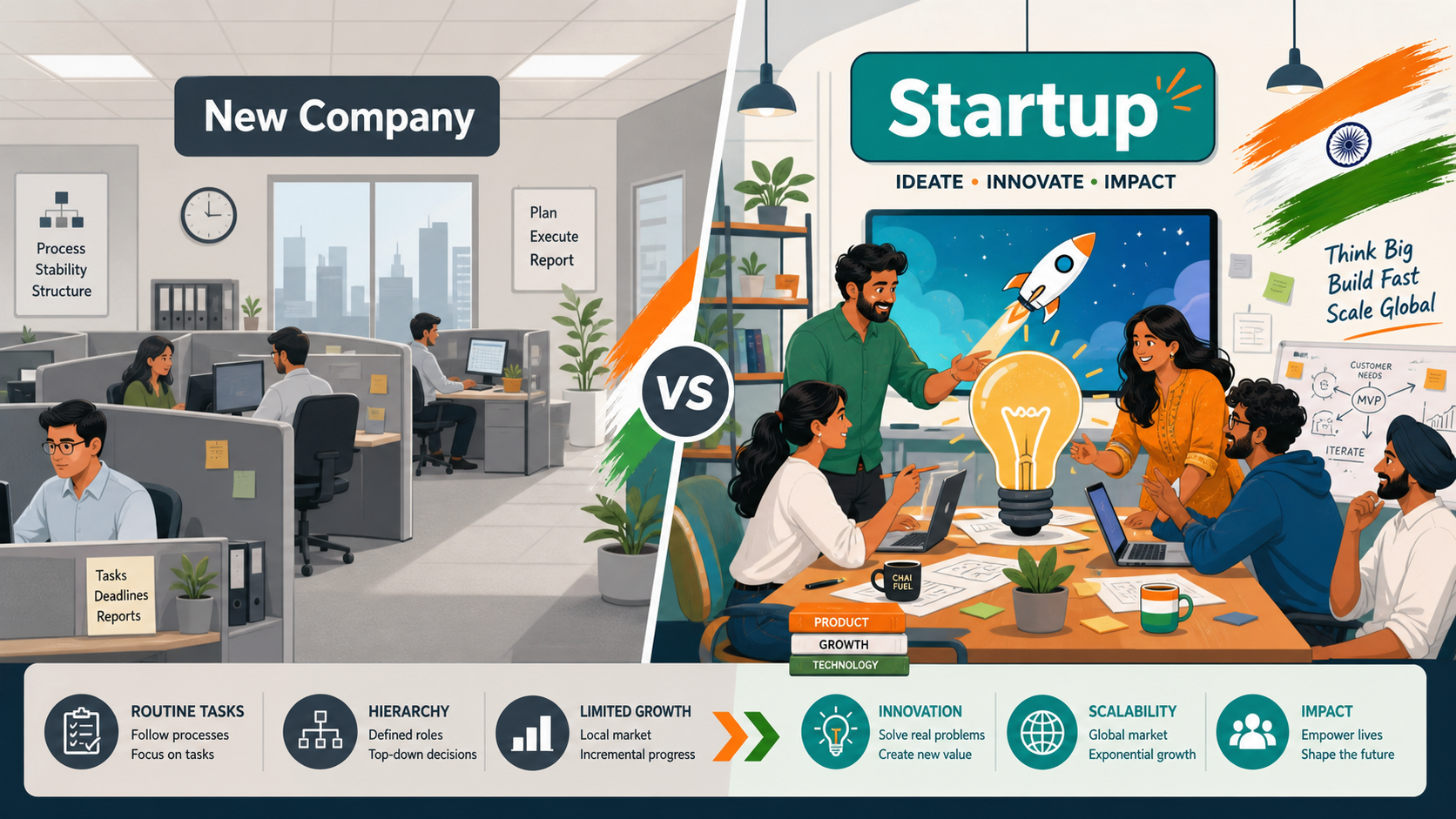
Starting a new business is not the same as starting a startup. In common conversation, people often call every newly formed company a startup. But under Startup India policy and certain Income Tax provisions, the word “startup” has a much narrower meaning.
A business may be newly incorporated, active, and even profitable, yet it may still not qualify as a startup in the legal or policy sense. That is why founders must understand an important truth: every new Private Limited Company is not a startup.
New Business vs Startup: Why the Difference Matters
A new business is simply a business that has recently started its operations. It may be formed as a Private Limited Company, LLP, or another recognised business structure, but its newness alone does not make it a startup.
For example, if a group of professionals starts a software development company that builds websites, mobile apps, or custom software for clients, it is certainly a new business. But that alone does not mean it is a startup for Startup India or Income Tax benefit purposes.
What Is a Startup in the Policy Sense?
Under the Startup India framework, a startup is generally an entity incorporated in India as a Private Limited Company, LLP, or registered partnership firm, which is within the prescribed age and turnover limits and is working towards innovation, development, improvement of products, processes, or services, or a scalable business model with high potential for employment or wealth creation.
This means two things clearly. First, every startup is a new business. Second, every new business is not a startup. Recognition depends not just on registration, but also on the nature of the business and formal eligibility.
Starting a Software Company ≠ Startup
Suppose a new company is formed as ABC Software Solutions Private Limited. It offers app development, website development, ERP implementation, and outsourced coding services for clients. It earns revenue by billing for services and manpower.
This is a valid and respectable business, but it is primarily a software services company. If it is only delivering client-based services and not building anything innovative, proprietary, or scalable as its own product, it may not fit the policy idea of a startup.
So, starting a software company is not automatically a startup. It may be a new company, but not necessarily a startup in the Startup India sense.
Invention of New Software = Potential Startup
Now take a different case. A company develops a new cloud-based software product that solves a specific industry problem, uses its own intellectual property, and can be sold repeatedly to thousands of customers without depending entirely on billable manpower.
For example, a company may create a new AI-based compliance engine that automatically reviews contracts, flags tax risks, and generates predictive alerts for businesses. If this solution is genuinely innovative and scalable, it is much closer to the startup model recognised under Startup India.
In simple words: building a service company is one thing; inventing a new software product with innovation and scale is another. The second example is what more closely resembles a startup.
Every New Private Limited Company Is Not a Startup
This is one of the most misunderstood areas in practice. Many founders believe that once they register a Private Limited Company, they automatically become a startup. That is not correct.
A new Private Limited Company may be engaged in routine trading, consulting, contracting, staffing, or services. It may be new, but if it lacks innovation and scalability, and if it does not obtain recognition under Startup India, it remains a normal business entity rather than a recognised startup.
Legal form alone does not create startup status. The real test is the business model, the innovation involved, the potential to scale, and recognition under the applicable framework.
Income Tax View: “New Company” vs “Eligible Startup”
Under the Income Tax framework, a newly incorporated company does not get startup tax benefits merely because it has recently begun business. Normal business taxation applies unless the entity qualifies as an eligible startup under the specific tax provisions.
Section 80-IAC provides a profit-linked deduction to eligible startups, but that benefit is tied to strict conditions. These include DPIIT recognition, prescribed incorporation period, entity type, turnover limits, and certification requirements under the notified framework.
That is why the words “new company” and “eligible startup” should never be treated as identical. A founder who misunderstands this may expect tax holidays that are simply not available.
Startup India View: Recognition Is the Real Badge
Startup India recognition is not based on self-description. A business becomes a recognised startup only when it satisfies the prescribed criteria and obtains recognition through the relevant government process.
The commonly referred conditions include incorporation as a recognised entity in India, age limit of up to 10 years, turnover not exceeding the prescribed threshold, and a business model focused on innovation, improvement, or scalability with wealth or employment generation potential.
So the correct approach is not to ask, “Is my company new?” The better question is, “Is my business innovative, scalable, and recognised under the startup framework?”
The Right Way to Think About New Beginnings
If a company is merely offering routine services, it may be a strong and profitable business, but that alone does not make it a startup. If a company creates a new product, improves an existing process in a meaningful way, or builds a scalable platform with strong growth potential, it may fit the startup framework more closely.
In short: every startup is a new beginning, but every new beginning is not a startup. A new software company is not automatically a startup, but the invention of a genuinely new and scalable software product may qualify as one.
Ready to Simplify Your Compliance Journey?
Book a consultation with our experts and get a customized compliance roadmap for your business.