-
 Puregen Labs Meclizine
1 × $$55.00
Puregen Labs Meclizine
1 × $$55.00



GST on Export and Import: Common Problems and Practical Solutions
May 19, 2026
148 views
GST on export and import can either unlock cash flow or choke it through refunds, ITC mismatches and notices. This article explains how GST applies to exports (zero-rated supplies) and imports, highlights common practical issues, and shares simple compliance steps to avoid delays, disputes and working capital blockage.
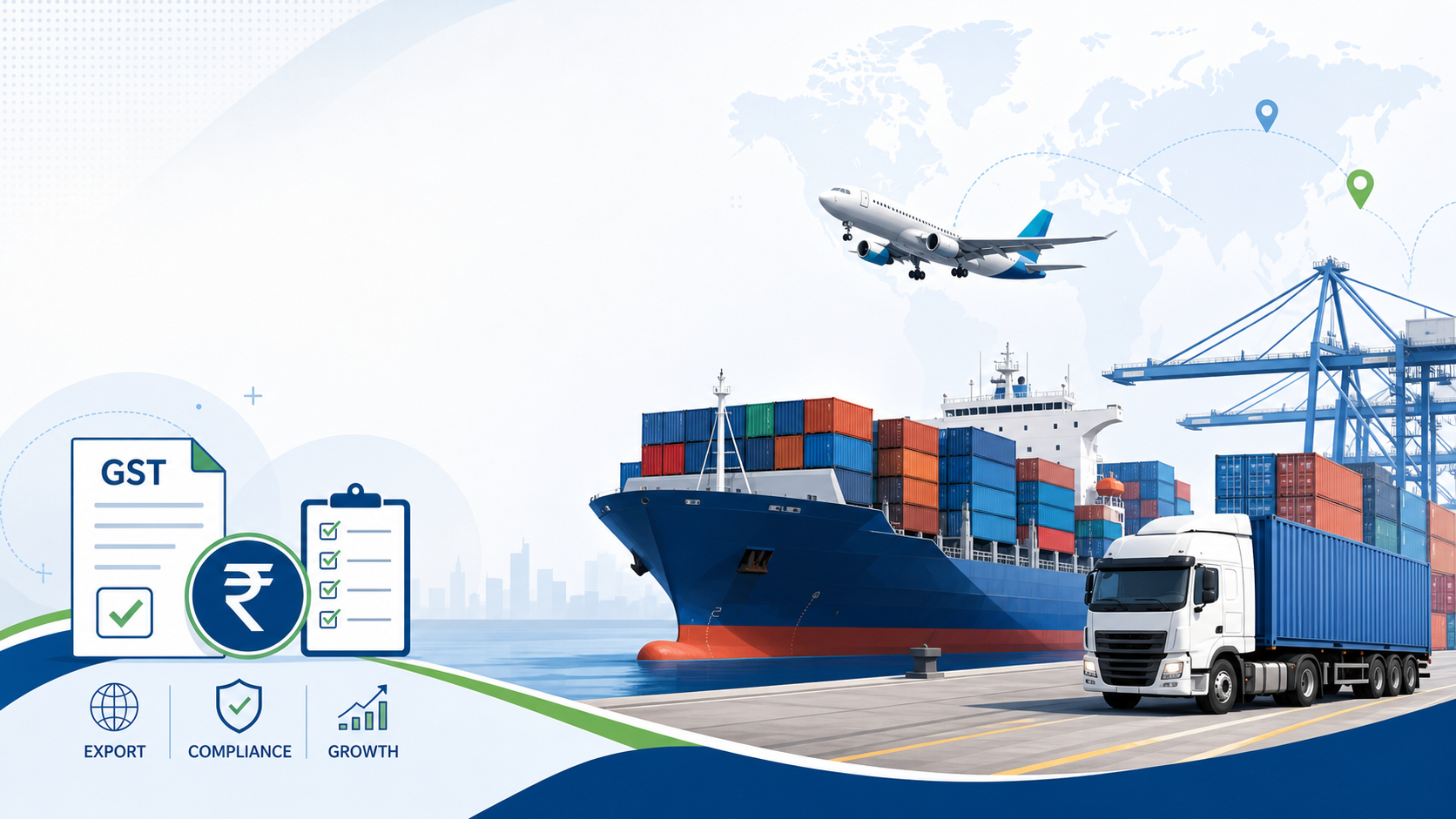
A complete guide for Indian businesses engaged in international trade
International trade holds enormous promise for Indian businesses. Yet many exporters and importers find themselves trapped in GST-related confusion — blocked working capital, delayed refunds, ITC mismatches, notices, and penalties. The good news? Most of these problems are avoidable with the right knowledge and compliance discipline.
This blog breaks down how GST applies to exports and imports, the most common pitfalls businesses face, and — more importantly — how to fix them.
Part 1: GST on Exports — Zero-Rated Supply
What Does "Zero-Rated" Mean?
Under Section 16 of the IGST Act, 2017, exports of goods and services are treated as Zero-Rated Supplies. This is one of the most exporter-friendly provisions in Indian tax law.
Zero-rating does NOT mean exports are exempt from GST. It means:
- The GST burden should not ultimately fall on the exporter
- The exporter is entitled to a refund of Input Tax Credit (ITC) paid on inputs used in production
- Unlike exempt supplies, zero-rated supplies allow full ITC claim
In simple terms: you pay no output tax on exports, and you get back the taxes you paid on your inputs.
Two Ways to Export Under GST
Exporters have two legally valid options under Section 16 of the IGST Act:
- Export Under LUT (Letter of Undertaking) — Export goods or services without paying IGST. File Form GST RFD-11 on the GST portal before commencing exports. Claim refund of unutilised ITC under Rule 96A of CGST Rules. This is the preferred route as it protects cash flow.
- Export with Payment of IGST and Claim Refund — Pay IGST on the export invoice. The shipping bill is deemed a refund application under Rule 96. Refund is processed automatically once GSTR-3B and Export General Manifest (EGM) are filed and validated against ICEGATE data.
Pro Tip: The LUT route is simpler, faster, and more cash-flow friendly. Filing your LUT before the start of each financial year is the first step to smooth export compliance.
LUT — What You Need to Know
- Form: GST RFD-11
- Validity: One financial year (expires 31 March)
- Who can file: All registered exporters of goods/services and SEZ suppliers
- Filing mode: Online on GST portal using DSC (Companies/LLPs) or EVC (others)
- Documents needed: GSTIN, PAN, IEC code, authorised signatory details
The LUT must be renewed every year. If it lapses, your exports lose zero-rated status and you may have to pay IGST until a fresh LUT is filed.
Part 2: GST on Imports — Inter-State Supply
How Are Imports Taxed?
Under Article 269A of the Constitution and Section 7 of the IGST Act, all imports into India are treated as Inter-State supplies. Three taxes apply:
- IGST on import of goods — calculated on Assessable Value + Basic Customs Duty + applicable cess
- Customs Duty (Basic Customs Duty + cess) — charged at the point of entry
- GST on import of services — paid under Reverse Charge Mechanism (RCM)
The IGST paid at the time of import is eligible as Input Tax Credit (ITC), which can be used to offset output GST liability. However, Basic Customs Duty (BCD) is not available as ITC.
Import of Services — The RCM Trap
Many businesses unknowingly violate GST rules when they receive services from foreign vendors — software subscriptions, consulting, design, royalties, or management fees from group companies abroad.
Under Notification No. 10/2017-IT(R), any service supplied by a person located outside India to an Indian registered recipient attracts IGST under Reverse Charge Mechanism (RCM).
- The Indian recipient pays the GST, not the foreign supplier
- Tax must be paid in cash — not from ITC balance
- The IGST paid can be claimed back as ITC in the same month (subject to eligibility)
- A self-invoice must be raised within 30 days under updated invoicing rules
Failure to discharge RCM on import of services is a common audit trigger that results in demands, interest, and penalties.
Part 3: Common Problems and How to Fix Them
Common Export Problems & Solutions
1. Shipping Bill Mismatch with GST Return
Cause: Invoice number, HSN code, or value discrepancy between ICEGATE and GSTR-1.
Fix: Match all invoice details with the shipping bill before filing. Reconcile GSTR-1, 3B, and ICEGATE data every month.
2. Incorrect or Lapsed LUT
Cause: Using an expired LUT or starting exports before LUT is filed.
Fix: File/renew LUT (Form GST RFD-11) before every financial year begins.
3. Invoice Mismatch in GSTR-1
Cause: Data entry errors or incorrect export tagging in GSTR-1.
Fix: Cross-check every export invoice before filing. Use ERP-based auto-reconciliation tools.
4. Delay in Refund Processing
Cause: Missing EGM filing, GSTR-3B mismatch, or unanswered Deficiency Memo (RFD-03).
Fix: Track refund status on ICEGATE. Respond to RFD-03 within the prescribed timeline.
5. ITC Blocked Due to Vendor Non-Compliance
Cause: Supplier not filing returns; credit not appearing in GSTR-2B.
Fix: Monitor GSTR-2B monthly. Implement a vendor compliance tracking system.
6. Wrong HSN / Tax Classification
Cause: Incorrect HS code leading to rate disputes or refund blockage.
Fix: Verify HSN codes on both customs tariff and GST rate notifications. Seek a professional classification opinion if unsure.
Important Update (Jan 2026): DGFT has mandated that every eBRC must now be mapped to individual GST invoice details — GSTIN, invoice number, and date. Exporters must maintain invoice-wise reconciliation between GST returns, shipping bills, and bank realizations.
Common Import Problems & Solutions
1. IGST Credit Not Reflecting
Cause: IGST paid at customs not auto-syncing with GSTR-2B.
Fix: Reconcile Bill of Entry with GSTR-2B. Contact jurisdictional officer if mismatch persists.
2. Wrong Valuation in Bill of Entry
Cause: Under/over-declaration of assessable value or incorrect freight and insurance treatment.
Fix: Follow customs valuation rules. Maintain proper import contracts and invoices.
3. Delay in Claiming ITC
Cause: Missing the ITC time limit (30 November of the following financial year).
Fix: Maintain a monthly import register. Claim IGST on imports within the prescribed time limit.
4. Reverse Charge Confusion on Services
Cause: Uncertainty about whether foreign service payments attract RCM.
Fix: Review all foreign vendor contracts. Apply RCM wherever the place of supply is India and the recipient is registered.
5. Vendor / CHA Documentation Errors
Cause: Incorrect HS code, GSTIN, or description in Bill of Entry.
Fix: Share a standard import instruction sheet with your CHA. Review the draft Bill of Entry before customs clearance.
Part 4: Key Compliance Checklist
Before your next export or import shipment, tick off these six items:
- Proper LUT / Bond Compliance — Valid LUT in place for the current financial year
- Accurate HSN & GST Classification — Correct codes on invoice, GSTR-1, shipping bill, and Bill of Entry
- Timely GST Return Filing — GSTR-1 and GSTR-3B filed on time with correct export/import details
- ICEGATE vs GST Reconciliation — Cross-check export data between ICEGATE and GST portal monthly
- Vendor Compliance Tracking — Ensure suppliers are filing returns and ITC appears in GSTR-2B
- Proper Documentation Trail — Maintain invoices, shipping bills, Bills of Entry, LUT/Bond, BRC/FIRC records
Final Thought: It's Not Just About Tax Payment
Export and Import under GST is not just about tax payment. The most successful businesses treat compliance as a strategic discipline that directly impacts their cash flow and profitability.
- Smooth Working Capital — No cash blocked in refunds or disputes
- Faster Refund Processing — Clean documentation gets refunds processed without delays
- Seamless ITC Flow — Maximum credit utilisation reduces net tax cost
- Strong Compliance Framework — Fewer notices, lower litigation risk, and better audit readiness
Correct Compliance = Better Cash Flow + Lower Litigation Risk
Need help with your GST export-import compliance? Connect with a qualified GST practitioner to review your documentation, reconcile your returns, and ensure your working capital stays where it belongs — in your business.
© MACS Edge | Disclaimer: This blog is for educational purposes only. Tax positions should be verified with a qualified professional based on your specific circumstances.
Ready to Simplify Your Compliance Journey?
Book a consultation with our experts and get a customized compliance roadmap for your business.