-
 Puregen Labs Meclizine
1 × $$55.00
Puregen Labs Meclizine
1 × $$55.00


Understanding One Person Company (OPC) Before Registration in India
May 11, 2026
184 views
Planning to register a One Person Company (OPC)? This brief guide helps solo entrepreneurs understand how OPC works, its key benefits and limitations, and the practical points to check before choosing it as their business structure.
Choosing a One Person Company (OPC) can be an excellent option for solo founders who want the benefits of a company structure without immediately bringing in partners. Before you register, it is important to understand what OPC really means for your risk, compliance, funding, and future growth. A clear understanding at this stage helps you avoid later restructuring and keeps your business aligned with your long-term plans.
Many entrepreneurs are attracted to OPC because it appears to be a “simple company for a single owner.” While this is partially true, it is still a formal corporate structure governed by company law, with its own set of obligations and expectations. Treating OPC casually—as if it were just a proprietorship with a different name—can lead to confusion and compliance gaps over time.
What Is a One Person Company (OPC)?
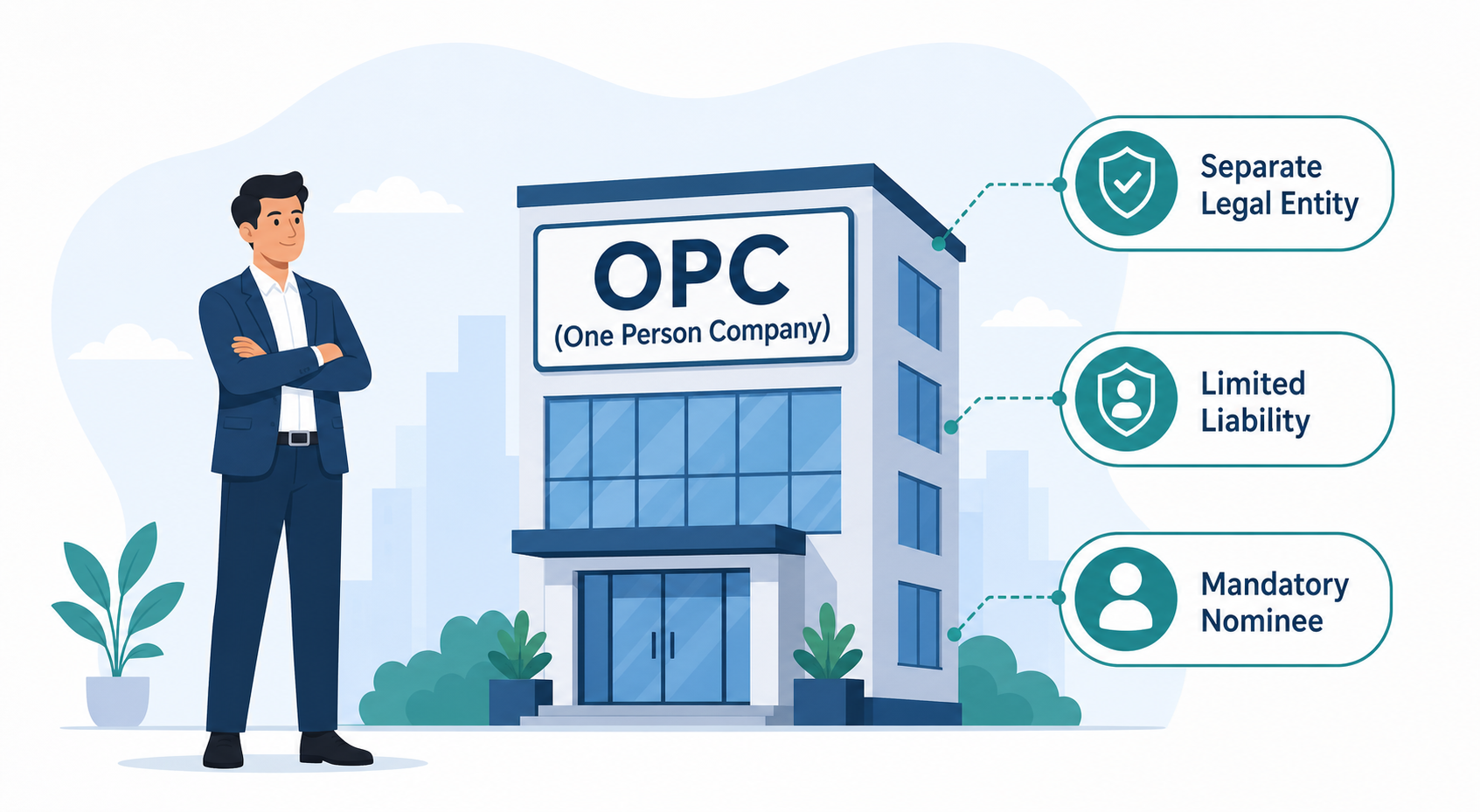
A One Person Company is a form of private company that allows a single individual to act as the sole member or shareholder. The company has a separate legal identity, which means it can own assets, enter into contracts, and incur liabilities in its own name. This separation between the individual and the entity is one of the key reasons solo founders consider OPC over proprietorship.
OPC was introduced to give individual entrepreneurs a structured vehicle to operate through, without forcing them to add a second shareholder just to meet traditional private company requirements. However, even though there is only one member, the OPC is still a company and is expected to follow core corporate compliances, maintain basic records, and operate with a minimum level of governance.
Key Features You Should Know Before Registration
Before filing incorporation documents, it helps to understand the core characteristics of OPC. You can have only one member at a time, which means ownership is concentrated in your hands. Along with this, you must nominate another individual who will step in as member in case of your death or incapacity. This nomination requirement is unique to OPC and needs to be decided thoughtfully.
Another important feature is limited liability. Your personal assets are generally protected, and your risk is restricted to the extent of your investment in the company. At the same time, since OPC is treated as a type of private company, it will have annual filing obligations, financial statement preparation, and certain event-based compliances that you must be prepared to follow from the very first year.
Advantages of OPC for Solo Entrepreneurs
One of the biggest advantages of OPC over a sole proprietorship is the legal separation between you and your business. This separation provides a layer of protection if the business faces losses, disputes, or legal claims, which is particularly valuable when you deal with contracts, credit, or higher-value transactions. It also gives your business a more structured image in the eyes of clients and vendors.
OPC can also enhance your brand positioning. Operating through a company framework often inspires greater confidence among institutional clients, vendors, and financial institutions. This can help when you pitch for B2B work, apply for loans, or negotiate with larger counterparties who prefer dealing with organised entities rather than informal setups.
Limitations and Practical Considerations
Despite its advantages, OPC is not always the ideal structure. The single-member restriction means you cannot immediately bring in an equity partner as a co-owner. If you anticipate adding a co-founder or investor in the near future, you may have to convert your OPC into a standard private limited company, which involves additional time, process, and cost.
Funding is another area where OPC has practical limitations. While small loans or credit facilities may still be accessible, equity investors generally prefer a regular private limited company with a flexible shareholding structure. If external investment is part of your medium-term plan, you should carefully consider whether it is better to start directly as a private limited company instead of an OPC.
Compliance Expectations You Should Be Ready For
OPC offers some relaxations compared to a classic private limited company, but it is not a zero-compliance structure. You will still be expected to maintain proper books of account, prepare financial statements, and file annual returns within prescribed timelines. There may also be specific event-based filings whenever key corporate actions take place.
If your main goal is to avoid formalities altogether, OPC may not match your expectations. It is best suited for founders who are comfortable with a moderate level of structure and are willing to follow a basic compliance calendar. Going in with the right mindset helps you build a clean, well-governed entity from the start.
OPC vs Proprietorship: Which One Suits You?
The practical choice between OPC and a sole proprietorship often comes down to risk, scale, and perception. If your business is small, local, and low-risk, and you want to keep things extremely simple, a proprietorship might be sufficient. It is easy to start, inexpensive to run, and lighter in ongoing formalities.
If, however, you are dealing with higher-value projects, multiple clients, contractual obligations, or reputational risk, the limited liability and structured nature of an OPC can be a strong advantage. It creates a clearer boundary between your personal finances and your business activities, which becomes increasingly important as your operations grow.
Questions to Ask Yourself Before Registering an OPC
Before you commit to OPC registration, it helps to pause and ask a few practical questions. Do you see yourself remaining a solo owner in the near term, or is there a strong chance you will bring in a co-founder or investor soon? Are you prepared to follow annual filings and maintain basic records as part of running a company?
You should also evaluate your business model and risk profile. If your activity involves significant obligations, client money, or long-term contracts, limited liability and a separate legal entity can be valuable safeguards. When your answers are clear on these points, the decision to choose OPC—or to opt for a different structure—becomes much more confident and informed.
The MACS EDGE Support for OPC Decisions
At MACS EDGE, we help founders look beyond the label of “One Person Company” and understand what it means in day-to-day operations. Instead of recommending OPC by default to every solo entrepreneur, we first analyse your growth plans, risk appetite, funding expectations, and personal priorities. Only then do we guide you towards OPC or an alternative structure that fits better.
Our role does not end with incorporation. We assist with post-registration compliances, documentation, and future restructuring when your business outgrows the original design. This way, you are not just registering a company—you are building a legal and operational foundation that supports your long-term vision as a founder.
Ready to Simplify Your Compliance Journey?
Book a consultation with our experts and get a customized compliance roadmap for your business.